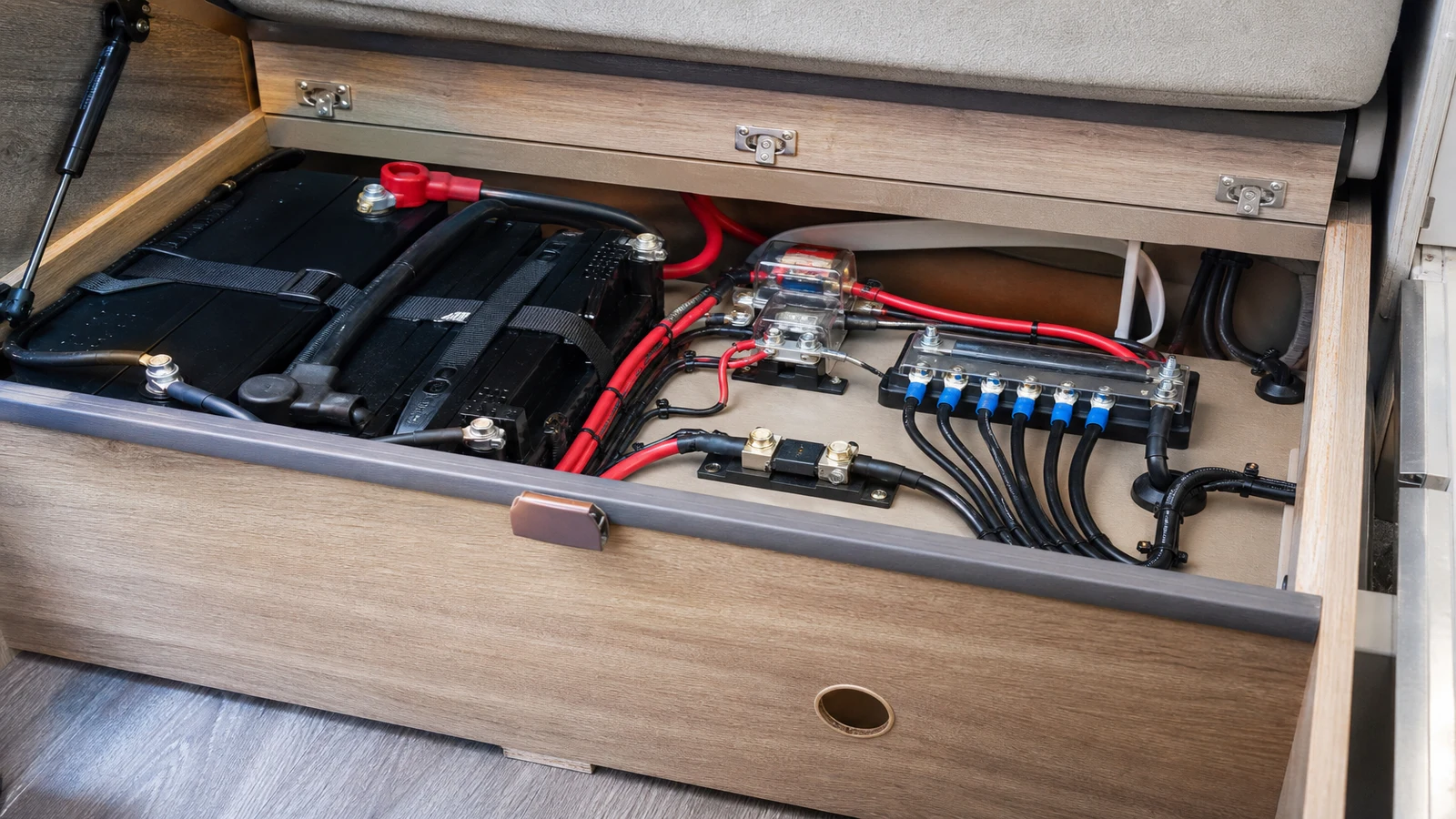
Schaudt EBL Motorhome Shunt Retrofit: UK Considerations
Short answer: adding a shunt to a motorhome with a Schaudt EBL system needs careful attention to the existing negative wiring, charging paths, and monitor instructions. Do not move cables or alter the EBL wiring unless you understand the system and the consequences.
Campervan battery monitoring depends on wiring layout as much as display settings. A neat app or percentage is misleading if the shunt is not seeing every current path.
Understand the existing EBL wiring first
A shunt measures current by sitting in the negative path and sensing the small voltage drop across it. Loads, chargers and inverter returns need to pass through the monitored side for the reading to make sense.
Where a shunt usually needs to sit
A chassis earth bypass lets some current avoid the shunt. The monitor may then under-count use, miss charging current or show a state of charge that drifts away from reality.
Why every leisure battery current path matters
Before changing monitor settings, map the leisure battery negative cable, charger negative, solar controller, inverter return and any chassis bond. The battery-side shunt terminal should be kept for the battery negative path only.
Avoid disturbing protected circuits
High-current DC wiring needs suitable cable size, fusing, clean crimps and secure terminals. Loose or undersized connections can heat up, especially around inverter loads.
When a specialist motorhome electrician is sensible
If the system includes lithium batteries, a BMS, an EBL unit or high inverter current, use a competent installer rather than moving main battery cables by trial and error.
Quick buying checklist
- Map every negative cable before changing anything.
- Keep charger and load returns on the monitored side of the shunt.
- Set battery capacity and full-charge synchronisation carefully.
- Check fuses, cable size and terminal security.
- Use a specialist for high-current or EBL systems.
FAQ
Is this a job for a beginner?
Basic reading and inspection can be suitable for careful owners, but repeated faults, high-current wiring, warning lights or unfamiliar systems need professional diagnosis.
What should I check before buying a tool or accessory?
Check the product instructions, the job you actually need to do, and whether the item matches your vehicle, appliance, clothing use, garden system, brew-day setup or burner arrangement. If the fit or rating is unclear, pause rather than guessing.
Final buying advice
A shunt is only as accurate as the path you give it. Fix the wiring layout first, then trust the monitor settings.